

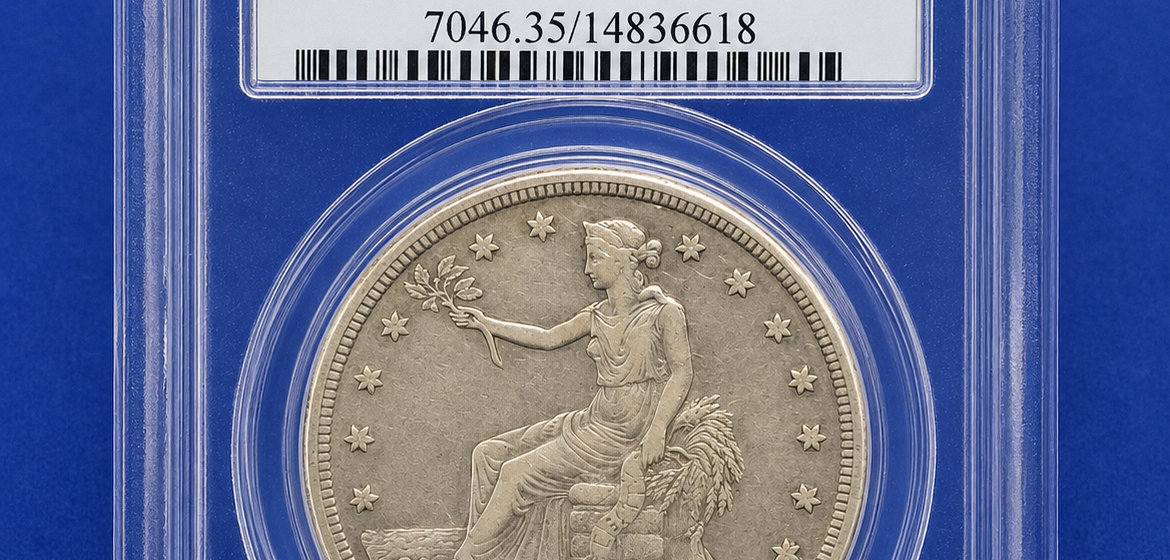
The U.S. trade dollar was a silver coin minted from 1873 to 1885 to compete with the Mexican peso in Asian markets. Weighing 420 grains, it contained more silver than standard U.S. dollars. Though intended for export, it gained domestic legal tender status, caused confusion, and was demonetized in 1876.
History and Purpose
- Made to trade with Asia to buy goods like silk and tea from China.
- Asian merchants preferred heavier Mexican silver coins.
- Designed by William Barber with Seated Liberty on the front and an eagle on the back.
- Minted in Philadelphia, Carson City, and San Francisco.
Domestic Problems
- Dropping silver prices made people buy the coins cheap and spend them locally at full value.
- Congress removed their legal tender status in 1876 and stopped regular production for use in 1878.
- Proof versions were made for collectors through 1885.
- The government bought most remaining coins back in 1887.
Chopmarks
- Many coins used in Asia feature small stamped Chinese characters.
- Local banks and merchants stamped them to prove the silver was real.
- These “chopmarks” make historical pieces popular with modern coin collectors.
Buy | Sell | Appraise
Call for an appointment to sell your collection: 754-221-7790
or look for us at local Coin Shows, Coin Club Meetings & Live Auctions

 Account
 Categories
 Search
 Compare
 Sidebar
 Top
Top